
Black Male Fatigue: An Intersectional Exhaustion Often Left Unnamed
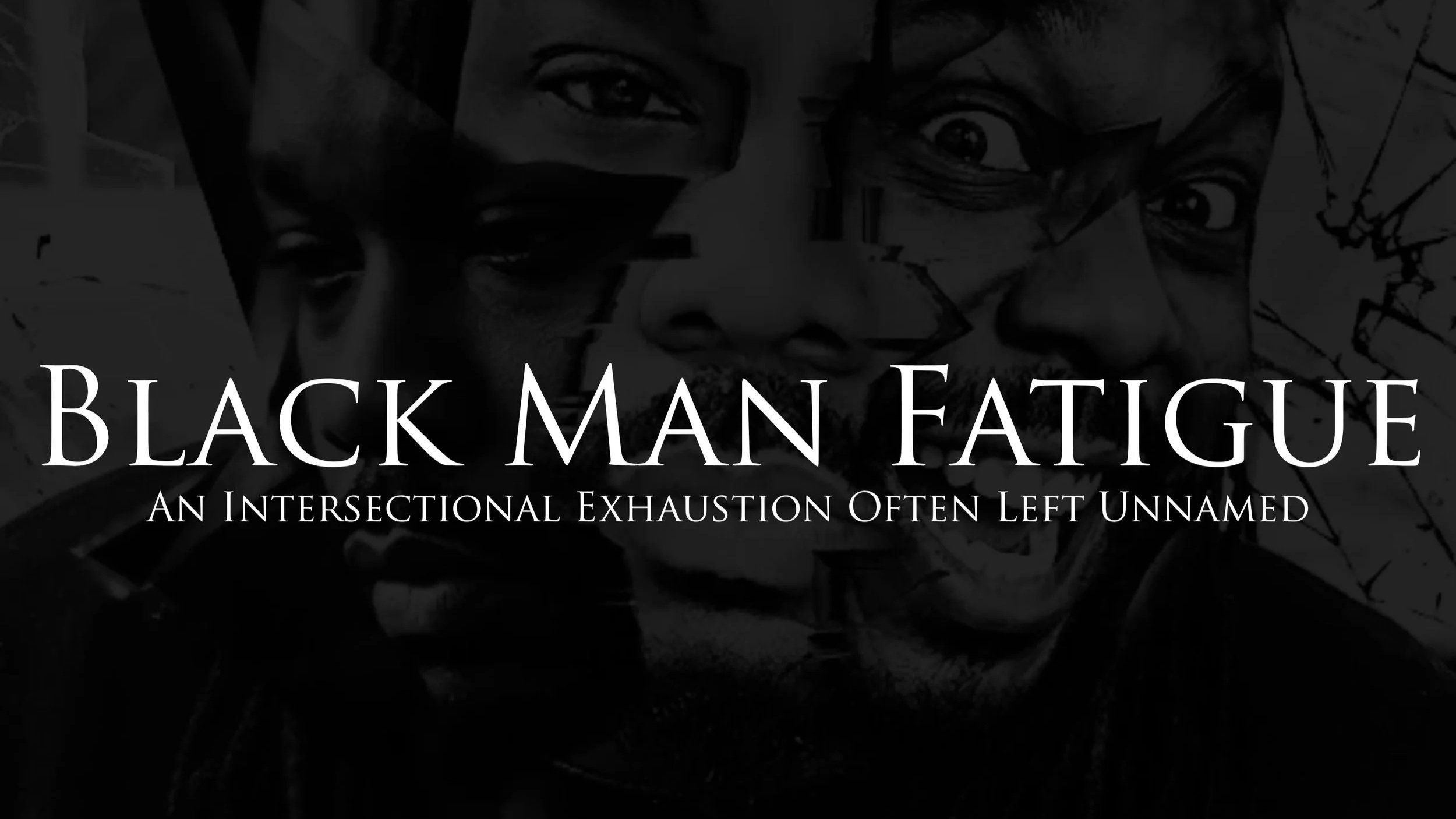
For many years, conversations about race felt distant. Before the mid to early 2000s, discussions around race and racial dynamics seemed vague, almost abstract. It felt as though meaningful progress had been made in American society. Even within the Black American experience, there appeared to be movement forward, suggesting that race no longer carried the same weight.
What was misunderstood was not the absence of racism, but a lack of awareness of it. I used to think we focused too much on race, but when a system is framed around race, it is difficult to escape returning to it in both discussion and practice.
For me, there was a lack of attunement to microaggressions. There was limited recognition of how perception was shaped before words were spoken. There was little awareness of how outcomes were influenced before effort was even applied.
A Personal Awakening
This perspective shifted while serving as an Executive Director. A simple observation was made regarding how a Black employee was being treated. There was an assumption that tenure, position, and organizational contribution would give that observation weight.
Instead, the response was retaliation.
This moment became an undeniable introduction to the lived reality of being Black in America within a professional setting. It was not overt, yet it was unmistakable. It existed in what was said without being said and understood without explanation.
The experience did not simply challenge a professional role. It disrupted an entire worldview.
The Subtle Weight of Perception
Within marriage, perception became more visible.
There was affirmation in being seen as a “good man” because of marriage and fatherhood. Yet beneath that affirmation were quiet questions. Subtle doubts surfaced regarding the ability to provide and care for a family.
These moments appeared in public settings, school environments, and everyday interactions. They were rarely explicit, but they were consistent enough to be felt and remembered.
Navigating Compounded Realities
The experience intensified during the divorce. What was already complex became layered.
There were two simultaneous battles.
One was internal
Maintaining integrity and meaning around the sanctity of marriage
One was external
Repeatedly justifying identity as a man, as a Black man, and as a father
Situations that should have been understood required explanation. Circumstances that should have been approached with fairness required defense.
Much of it felt unnecessary. None of it felt avoidable.
When It Extends Beyond the Individual
As a single father of two, the experience expands beyond self.
Patterns once observed personally are now visible in the lives of children. They are typecast and stereotyped before being fully known.
When mental health diagnoses are present, the complexity deepens. Without visible indicators, needs are often dismissed. Even with formal documentation, systems can default to policy rather than understanding.
Advocacy becomes constant.
The Nature of Ongoing Exhaustion
There exists a form of exhaustion that is difficult to define.
It is not simply stress.
It is not limited to anxiety.
It is persistent, layered, and often unnamed.
It disrupts rest. It lingers in thought. It creates a sense of vigilance that does not fully release. Even with sleep, exercise, and intentional care, there remains a sense of depletion.
This experience is not always visible, but it is deeply felt.
Understanding Black Fatigue
The concept of Black fatigue gained broader recognition through Black Fatigue: How Racism Erodes the Mind, Body, and Spirit by Mary Frances Winters (2020). The term describes the cumulative psychological and physiological toll that systemic racism takes on Black individuals over time.
Awareness of Black fatigue existed. It had been heard and reflected upon.
Yet something still felt incomplete.
There remained an aspect of lived experience that was not fully captured within that broader definition.
Naming the Experience
In recent months, the weight intensified. The exhaustion became heavier, more persistent.
It became necessary to name it.
Not just fatigue.
Not just exhaustion.
A layered, intersectional experience.
Black male fatigue.
Defining Black Male Fatigue
Black male fatigue is the compounded psychological, emotional, and physical exhaustion experienced by Black men as they navigate both the pervasive effects of systemic racism and the layered burden of negative social constructs tied specifically to Black masculinity and manhood.
It extends beyond general Black fatigue by incorporating the intersectional strain of confronting misandry, criminalization, hyper-surveillance, emotional suppression, and culturally reinforced expectations around strength, stoicism, and dominance.
It is further intensified by the paradox of being perceived as a beneficiary of patriarchal privilege while rarely receiving its protections. Black men are often grouped within dominant categories such as men or within broader Black communities, yet are frequently excluded from the safety, grace, and collective benefits those identities are assumed to provide.
At its core, Black male fatigue reflects the tension of having to prove humanity while being perceived as a threat, to lead while being limited, to feel while being told not to, and to belong without ever fully being protected.
Myths of Daily Living as a Black Man: A Deeper Examination
Misconceptions often shape public perception more than empirical evidence. The following examples highlight discrepancies between widely held beliefs and research-based findings.
Black Fathers Are Largely Absent
Contrary to this perception, federal data indicate high levels of engagement among Black fathers. According to the Centers for Disease Control and Prevention (CDC, 2013), Black fathers living with children under the age of five were more likely than their White or Hispanic counterparts to engage in daily caregiving activities such as bathing, dressing, and diapering (70%, compared to 60% and 45%, respectively). Additionally, among fathers of school-aged children, Black fathers were more likely to assist with homework daily (41%, compared to 28% of White fathers and 29% of Hispanic fathers).
Black Fathers Are Uninvolved Outside Traditional Family Structures
The same CDC (2013) report demonstrates that resident fathers, regardless of race, show high levels of involvement. For children under age five, 96% of fathers shared meals with their children regularly, 98% engaged in play activities, and 90% participated in routine caregiving. These findings suggest that perceptions of disengagement are more reflective of narrow societal expectations than actual behavior.
Black Men Are Lazy
Labor market data does not support this characterization. According to the Bureau of Labor Statistics (2026), Black men have a labor force participation rate (68.0%) comparable to that of White men (68.9%). However, Black men experience significantly higher unemployment rates (7.0% compared to 3.4%), indicating disparities in access to employment rather than a lack of willingness to work.
Black Men Receive Equal Employment Opportunities
Research on hiring practices indicates persistent disparities. Bertrand and Mullainathan (2004) found that resumes with White-sounding names received approximately 50% more callbacks than identical resumes with Black-sounding names. These findings highlight systemic inequities in hiring processes that impact employment outcomes.
Most Black Men Are or Have Been Incarcerated
This perception is inaccurate. While disparities in incarceration exist, the majority of Black men have not been imprisoned. The Sentencing Project (2023) estimates that approximately 1 in 5 Black men born in 2001 will experience incarceration during their lifetime, meaning that most will not.
Black People Represent the Majority of the Incarcerated Population
Black Americans are disproportionately represented in the criminal justice system but do not constitute the majority of the population. According to the U.S. Census Bureau (2024), Black Americans make up approximately 13.7% of the U.S. population, yet data from the Prison Policy Initiative (2023) indicates they account for roughly 37% of incarcerated individuals. This reflects overrepresentation rather than majority status.
Black fatigue provides a critical framework for understanding the toll of systemic racism. However, Black male fatigue identifies a more specific intersection where race and gender converge, creating a distinct and often overlooked burden.
It is the exhaustion of navigating systems while being perceived before being known. It is the strain of being held to expectations that shift depending on context, role, and narrative.
While perception often shapes the story, both lived experience and empirical data reveal a different reality.
Black male fatigue is not only about what is experienced.
It is about what must continually be disproven.
It is the weight of being misunderstood in spaces that have already formed conclusions.
It is the effort of advocating for one’s children while protecting their identity.
It is the calculation required to exist in environments where assumptions precede presence.
It is not simply living.
It is living while translating, defending, adjusting, and enduring.
To name it is not to dwell in it.
It is to acknowledge that life is not always navigated on neutral ground.
And still, there remains a desire that is both simple and profound
To live fully
To be seen clearly
To exist without constant defense
Because at our core, we are love
And even love should not have to prove it belongs just to breathe
References
Bertrand, M., & Mullainathan, S. (2004). Are Emily and Greg more employable than Lakisha and Jamal? A field experiment on labor market discrimination. American Economic Review, 94(4), 991–1013. https://doi.org/10.1257/0002828042002561
Bureau of Labor Statistics. (2026). Labor force statistics from the current population survey (Table A-2). U.S. Department of Labor. https://www.bls.gov/news.release/empsit.t02.htm
Centers for Disease Control and Prevention, National Center for Health Statistics. (2013). Fathers’ involvement with their children: United States, 2006–2010 (National Health Statistics Reports No. 71). https://www.cdc.gov/nchs/data/nhsr/nhsr071.pdf
Prison Policy Initiative. (2023). Mass incarceration: The whole pie 2023. https://www.prisonpolicy.org/reports/pie2023.html
The Sentencing Project. (2023). Lifetime likelihood of imprisonment. https://www.sentencingproject.org/reports/mass-incarceration-trends/
U.S. Census Bureau. (2024). QuickFacts: United States. https://www.census.gov/quickfacts/fact/table/US/PST045224
Winters, M. F. (2020). Black fatigue: How racism erodes the mind, body, and spirit. Berrett-Koehler Publishers.

Love Is A Parable- an initiative and movement that later became an organization within itself. Love is A Parable is a DBA and subsidiary of Altar and Dwelling Place, Inc. We are a charitable and educational 501c3 organization, that provides character, social, and leadership development to those who have an aspiration toward unity, love, and kindness through a reflective thinking approach and sacred-box theory that involves value-based education.

J. Dwayne Garnett, BSRT, MHA, QP
Chief Executive Officer
Love Is A Parable
Available for Empowerment Speaking Engagements, Consultations, Uncovering Sessions, and Instruction.
Find out more about J by clicking HERE!